
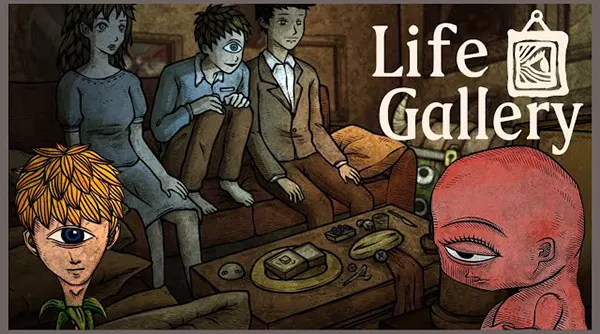
Life Gallery (Android/iOS): a bleak story-driven puzzle about symbols, memory and family trauma
Life Gallery is a narrative puzzle game for Android and iOS built around a sequence of hand-drawn illustrations. Each “picture” works like a separate scene where you tap, drag, rotate and combine objects to trigger changes in the artwork. On the surface the game looks minimal, but it tells a harsh story about family collapse, grief, guilt, and a cult-like influence that keeps appearing through recurring symbols. As of 2026, the game remains available on both major mobile stores and continues to be downloaded and discussed as a short, intense psychological experience.
What Life Gallery is and why its format works so well
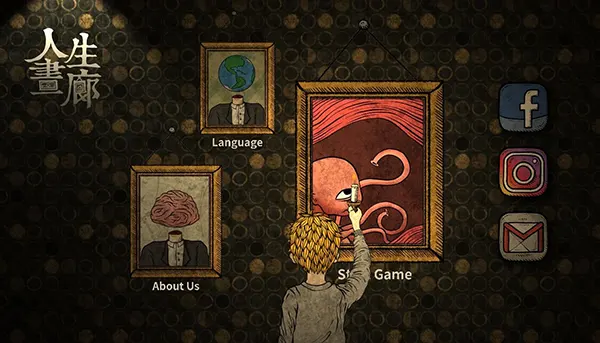
Life Gallery is structured as a chain of illustrated vignettes rather than a single continuous world. You move through a series of scenes, and each one contains a self-contained puzzle. When you solve it, the image transforms and reveals a new piece of narrative. This structure is effective because the game does not rely on long cutscenes or heavy dialogue. The story is embedded inside the illustrations, and the player uncovers it through interaction rather than exposition.
The visual style focuses on linework, muted colours, and unsettling composition. Many images feel like children’s book drawings twisted into something darker. This keeps the atmosphere consistent and makes details more noticeable. A small repeated element—an eye shape, a familiar object, a mark on the wall—often matters later. The artwork is not just decoration; it is the method by which the game communicates plot, emotion, and foreshadowing.
This format fits mobile play naturally. Each scene can often be solved in a few minutes, which means the game works well in short sessions. At the same time, the imagery is memorable enough that you can pause and return later without losing the thread. You do not need to remember complex maps or inventories—only the story clues the pictures leave behind.
Story tone: bleak, intimate, and deliberately uncomfortable
The story centres on a family where something has gone profoundly wrong. The game builds its narrative through metaphor: it rarely tells you directly what happened, but it forces you to see, handle, and rearrange symbolic objects linked to trauma and control. This can make the experience feel personal and uncomfortable, because the player is not only observing the tragedy but actively “opening” it.
One reason the tone lands is that puzzles and plot are inseparable. The actions you take in each scene often echo what the characters experienced. Sometimes you repair or restore something. Other times you expose something hidden or break a surface to reveal what sits underneath. The game quietly suggests that the truth has been buried, and the only way forward is to interact with what people tried to conceal.
By 2026, Life Gallery is widely considered a compact but emotionally heavy game rather than a long-form adventure. It aims for impact: unease, sadness, and recognition. It keeps returning to recurring motifs, so even when the story becomes surreal, it still feels coherent. The narrative may be abstract, but the emotional logic stays consistent from one scene to the next.
How the puzzle design uses symbols instead of tutorials
Life Gallery does not rely on traditional tutorials. The game expects the player to learn through visual cues. If an object looks misplaced, it likely moves. If a shape repeats, it might function like a code. If a character’s eyes are emphasised, you may need to change what they can see. These cues are not always obvious, but they form a kind of internal grammar that becomes easier to read as you progress.
Most puzzles are tactile and simple in execution. You slide panels, rotate items, drag objects into outlines, or trigger cause-and-effect sequences within the illustration. The challenge is rarely about complex controls; it is about interpretation. You must understand what the picture is implying and what hidden mechanism it is asking you to expose.
The game also uses misdirection. A scene may look “finished” until you touch a specific element and discover a hidden layer. Sometimes the key detail is not the most obvious object but something in the background. This fits the story’s theme: the family’s truth is not visible at first glance. Like the puzzles themselves, the narrative is something you uncover by pushing past appearances.
Recurring motifs and what they tend to represent
Life Gallery uses recurring motifs to give structure to its surreal storytelling. You repeatedly encounter eyes, missing body parts, fish imagery, ritual objects, and familiar household items shown in distorted form. These motifs usually signal identity, injury, control, or loss. The repetition is deliberate: it encourages the player to treat the images like a coded language rather than random surrealism.
The cult element is one of the main narrative threads. It is represented through symbols, patterns, and objects that hint at influence and manipulation. Even when a scene looks calm, these elements create tension because they suggest the presence of something controlling the family from behind the surface. The cult theme is more psychological than action-based, which makes it feel persistent and oppressive rather than dramatic.
Another strength is how ordinary objects become emotionally loaded. A toy, a photograph, a meal, or a door can carry meaning beyond what it appears to be. The game builds a sense that trauma is stored inside everyday things. Because you must physically interact with these objects to progress, the symbolism becomes tactile, not purely theoretical.
Practical details in 2026: availability, updates, performance, and content warnings
As of 2026, Life Gallery is available on Android through Google Play and on iOS through the App Store. It has also been distributed on PC through Steam, which confirms it as a stable title that has existed for several years rather than a short-lived mobile release. Its long availability matters because many narrative mobile games disappear after a brief window or stop being compatible with newer systems.
The mobile version is not tiny in file size because it contains many illustrated scenes, visual effects, and audio elements that contribute to its atmosphere. On modern phones, the game generally runs smoothly because it does not require high-end graphics processing, but users should still ensure they have enough storage and ideally install it over Wi-Fi. The touch controls are central to the gameplay, so a responsive screen makes the experience noticeably better.
It is also important to treat Life Gallery as psychological horror rather than a casual puzzle title. The game includes disturbing imagery and themes related to death, family harm, manipulation, and ritual influence. If you are sensitive to these topics, it is better to approach it cautiously or skip it entirely. The tone is bleak and the imagery is designed to unsettle, not simply entertain.
Who will enjoy it, and who may want to skip it
This game is best suited for players who enjoy story-driven puzzles where meaning matters as much as mechanics. If you like symbolic narratives, unsettling illustrated worlds, and games that ask you to interpret visual clues, Life Gallery delivers that experience in a concentrated format. It works especially well for those who prefer short but intense stories rather than long campaigns.
It may frustrate players who want strictly logical puzzles with consistent rule systems. Although the game has internal logic, it often relies on metaphor and lateral thinking. Some solutions feel more like decoding an artistic intention than solving a traditional brain teaser. Players who dislike ambiguity may find the game opaque in places.
Finally, it is not designed for players seeking action, progression systems, or competitive elements. Life Gallery’s reward is narrative understanding and emotional impact. If you approach it like an interactive illustrated novella, it can be memorable. If you expect a conventional puzzle adventure with clear tutorials and straightforward objectives, it may not be the right fit.